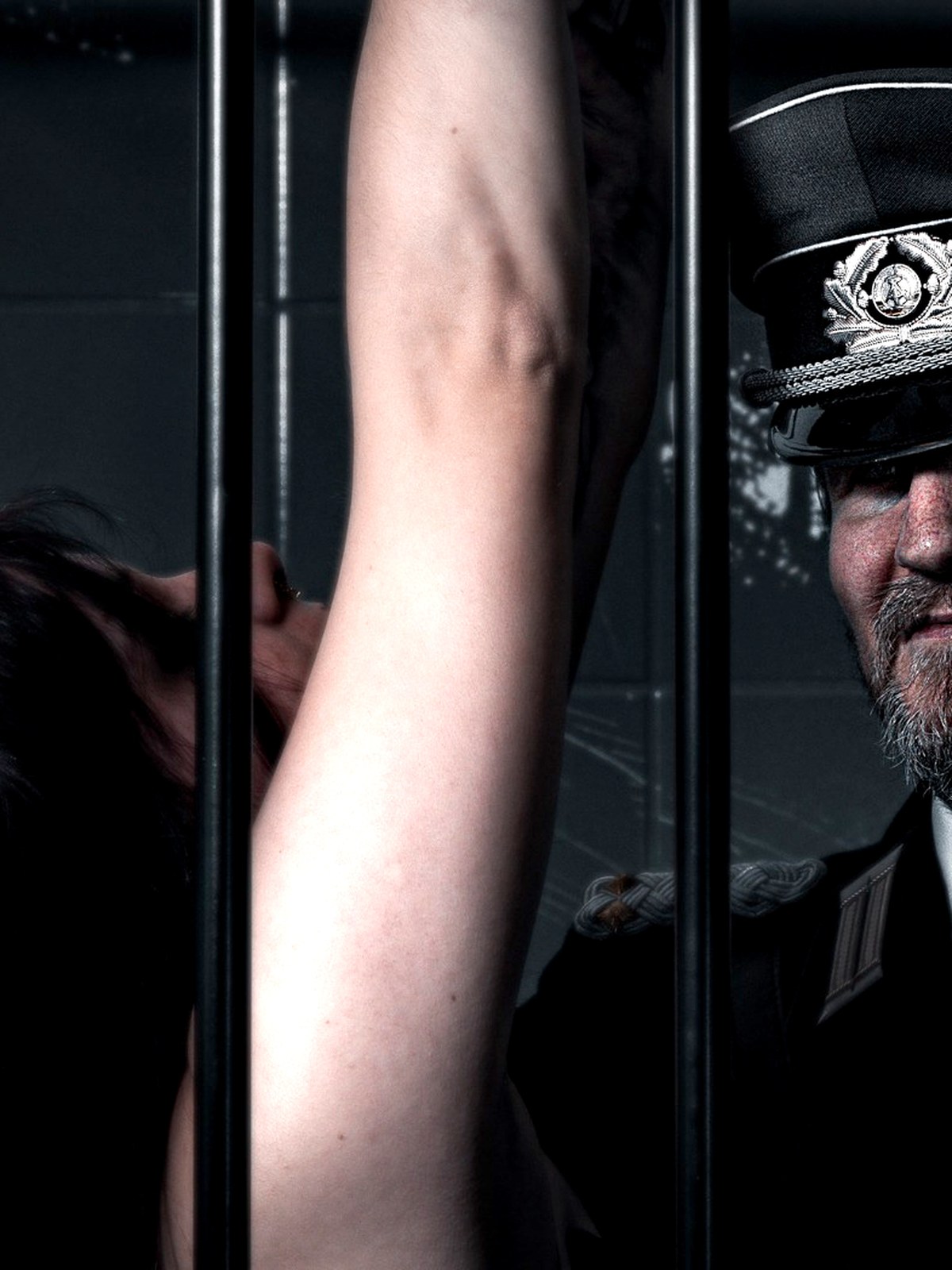
The Architecture of Anticipation - Why Removing Sensation Intensifies Everything That Remains
The hood goes on in a warm room, and within half a minute the room changes size. What was a familiar space with a window, a radiator and a chair becomes an unmapped volume, bounded by footsteps and the faint pressure of leather along the jaw. I walk four paces away and stop. I say nothing. Behind that fabric a person is now doing an enormous amount of work - listening, mapping, predicting - and none of it was asked for aloud. By the time I move again, much of this hour has already been settled behind that leather, in a room I made by taking one thing away.
Sensory deprivation has a simple reputation and a complicated reality. In the popular imagination it means blindfolds and hoods, and it does mean those things, but the equipment is the least interesting part of it. What matters is the deliberate removal of a channel the nervous system leans on, and what the nervous system then does instead. Vision carries a disproportionate share of our sense of safety and orientation. Take it away and hearing sharpens, the skin becomes a larger organ, and the internal narrator begins filling the silence with story. Stillness, enforced quiet and restraint achieve related effects by different routes.
The common assumption is that anticipation is the preliminary and sensation is the event. In practice it is closer to the reverse. A nervous system that cannot see spends its spare capacity predicting, and prediction is itself a form of experience - vivid, physical, sometimes overwhelming. Research on expectation and pain perception points the same way: what a body believes is coming shapes how the actual moment registers. A touch that has been waited for lands with a weight the same touch cannot carry when it arrives unannounced. The waiting is not packaging. Most of the time it is the content itself.
This changes what precision means. If anticipation does the heavier work, then the most consequential decisions in a session are not about intensity but about interval. Ninety seconds of nothing, then a single fingertip placed on the sternum, will register more distinctly than a sustained sequence delivered without pause. Silence is an instrument, and like any instrument it goes out of tune. Left too short, the pause reads as hesitation and the guest stays in their planning mind. Left too long, the architecture collapses into something else entirely, and recovering it costs far more than the pause ever bought.
That collapse deserves an honest name. Beyond a certain point tension stops being erotic and turns into abandonment, and crossing that point is one of the few genuinely damaging errors available in this work. It is not a fixed number of minutes. For one guest the edge sits at four minutes, for another at forty, and for the same guest it moves with sleep, stress, trust and how the week has gone. What changes at the threshold is the quality of the stillness. Held tension has a forward lean to it. Abandonment has a going-quiet, a small internal departure, a body that has stopped waiting for you.
Reading that without the usual cues is the actual skill. A hooded guest offers no face, so the information arrives elsewhere: the tone in the hands, the micro-movements of the feet, the angle of a covered head as it tracks a sound across the room, the difference between a sound made in the shaping of an experience and one made in merely enduring it. The calibration runs in both directions. Presence arrives without breaking the deprivation - a palm resting on an ankle, a floorboard deliberately allowed to creak, one word from a known voice at a known distance. The guest is alone. The guest is never abandoned.
None of this is improvisation dressed up as intuition. It is a discipline with a duty of care, and the least glamorous part of it is physical. A hood restricts airflow. A body held still in one position loses circulation, and in the wrong posture it can lose an airway quietly, because the person best placed to notice has been cut off from noticing. The forensic literature is worth reading on this: a review of restraint physiology sets out how a held position is thought to compromise breathing, by obstructing the upper airway or restricting the motion of the chest wall, diaphragm and abdomen, and how contested the evidence around it still is. So the shears stay within reach, nothing goes over a head that cannot come off in one movement, and current first aid training is a baseline, not a credential. Deprivation concentrates trust. Someone who cannot see has handed over their whole orientation, and the only honest response is preparation, aftercare, and a genuinely available exit.
The pattern reaches well past the dungeon. Contemporary life has quietly abolished waiting. Notifications arrive instantly, questions answer themselves in seconds, and the interval between wanting and having has been engineered down to almost nothing. Something is lost in that compression, and most people feel the loss without naming it. An hour spent hooded and still, with nothing to do but attend to a room, returns a capacity many guests describe afterwards as almost unfamiliar. The word they reach for is rarely intensity. What they describe is having been fully present for an unbroken stretch of time.
So the architecture of anticipation is mostly negative space. You build it by removing - light, sound, movement, information - and then you hold the resulting emptiness steady enough that a person can inhabit it rather than fall through it. Everything depends on the holding. The hood is cheap; the calibration is not. Done well, the moment the fabric finally lifts is not a return to normal but a widening, a room grown more detailed than the one that was left. That is the whole craft in a sentence. Take carefully, wait exactly, and give the sight back changed.
← Previous: When What You Asked For Is Not What You Needed - Reading the Need Beneath the Request