The First Session - What Actually Happens When You Walk In
He arrives fourteen minutes early and spends twelve of them on the opposite pavement, holding his phone as though reading something. Berlin does this to people: a plain door in a plain building, no sign, nothing to confirm he has the right address except a number he has now checked four times. Eight months of forum threads sit behind him. So do the films, which told him nothing true. He has imagined this entrance so often that the real one, chipped along one edge and hung with a neighbour's bicycle lock, seems almost rude in its ordinariness. Two minutes past the hour, he crosses the street and rings.
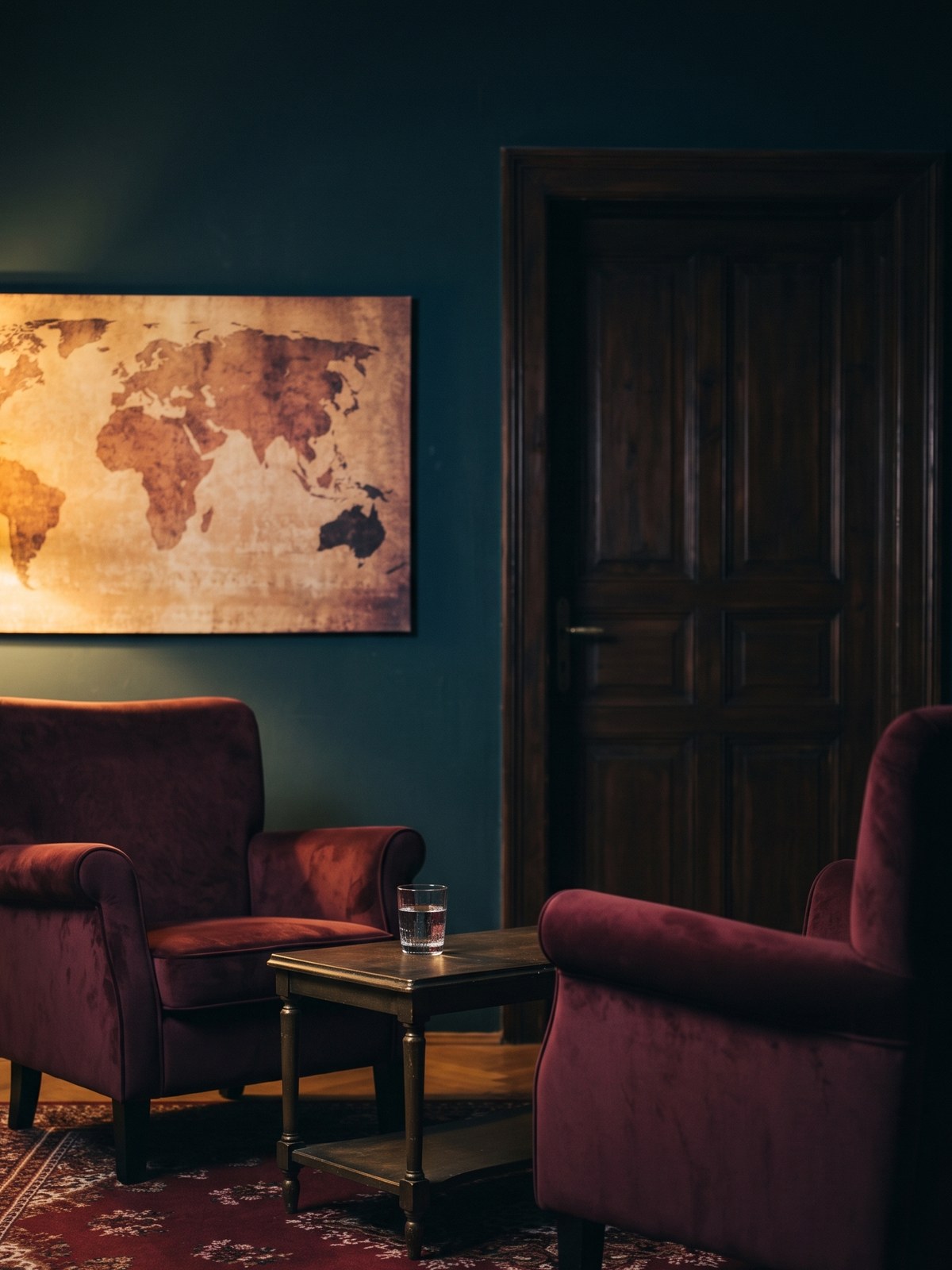
What follows is a coat taken, a seat offered, a glass of water or a cup of tea. The room is warm. The light is low without being theatrical, and nothing is happening yet. That surprises first-time guests more than anything else does. Most arrive braced for a switch: the door opens, a persona descends, the floor tilts beneath them. What they meet instead is a conversation between two adults who have not met before, one of them nervous and the other long accustomed to other people's nervousness. Twenty minutes of it, sometimes forty, before anything at all is asked of him.
That conversation carries everything that comes after. It is not a formality standing in front of the real thing; it is what makes the real thing permissible, and I have come to treat it as the session's foundation rather than its preamble. It is also far too large to compress into a paragraph here. Medical history, old injuries, language, limits, the things he does not want and will only admit to on the second asking: all of it deserves a piece of its own, and it gets one here next week. What the arrival itself asks is smaller. Come at the agreed time rather than early. Bring whatever answers you have. The hour is booked long enough that nothing needs hurrying, because hurry is what damages people, and a guest who feels rushed at the table will not settle later on.
Then he is shown where to change, and left alone to do it. The detail matters more than it looks. Undressing in front of a stranger is not yet part of what has been agreed, and a surprising amount of dignity lives in the small privacy of a door that closes. Some guests bring what they intend to wear, folded with more care than they would ever admit to. Some are given something. Some stay fully dressed through an entire first session, which is neither a failure nor a lesser experience. What changes in those few minutes alone is rarely the clothing. It is the moment a person decides, quietly and without an audience, to actually be here.
The session opens on a signal rather than a shout. In my rooms it is usually posture and address: he is asked to wait in a particular place, in a particular way, and the register between us shifts from that instant. The change is quiet enough that a stranger looking in might miss it entirely, and complete enough that both of us feel the room reorganise itself around it. A container has been declared open. We step inside and behave accordingly. That is what the structure is for. Once it has been built properly, nothing inside it needs renegotiating while it is happening, and not having to negotiate is what lets a person stop managing the evening and simply be in it. The nervousness generally leaves the body within ten minutes, replaced by something steadier and far more interesting: attention. Guests tell me afterwards that they came expecting fear and found concentration instead.
Inside, the work goes slower than the internet promises. Intensity is built, not switched on. I begin well below what was agreed and climb in measured increments, watching breath, hands, the small involuntary honesty of a jaw. Check-ins happen, and they do not puncture the mood, they belong to it. A safe word exists and is explained, though a well-calibrated session rarely needs one, because precision is what makes surrender possible in the first place. Nobody can let go in the hands of someone he suspects is guessing.
Sessions end deliberately, and this is the part almost nobody has read about. Intensity comes down in stages, the way an aircraft descends rather than the way a light switches off. Warmth, water, a blanket if the body has gone cold, quiet company while the nervous system finds its way back into ordinary time. Ten or fifteen minutes later comes a perfectly ordinary conversation: what worked, what did not, what he noticed, what he would want differently next time. He dresses himself again and leaves grounded and reliably hungry. The day after can bring a strange emotional weather, sometimes flat, sometimes tender, and saying so in advance is itself a form of care.
Fear of a first session rarely attaches to the practices themselves. It grows in an information environment assembled from pornography, courtroom reporting and moral panic, where the unspectacular competence of this work stays entirely invisible. Nobody films the twenty minutes at the table. Nobody dramatises the closed door for changing, or the blanket afterwards. BesD, the German professional association for sex workers, has argued against exactly this gap for years, and research across several European countries points the same way: stigma, not the work, produces most of the harm and most of the fear.
So arrive nervous. Nerves are appropriate to anything that matters, and their absence would concern me rather more than their presence does. Bring the questions you think are embarrassing, since those are almost always the useful ones. Nobody expects you to know how to kneel, how to address me, or what you want in any polished form - the first hour exists precisely for that. The door is plain. The tea is real. Everything after that moves at the speed of your consent.
Next: Aftercare Is Not an Afterthought - Why the Ending Is Part of the Same Work →