The Body Remembers - Somatic Release and What It Is Not
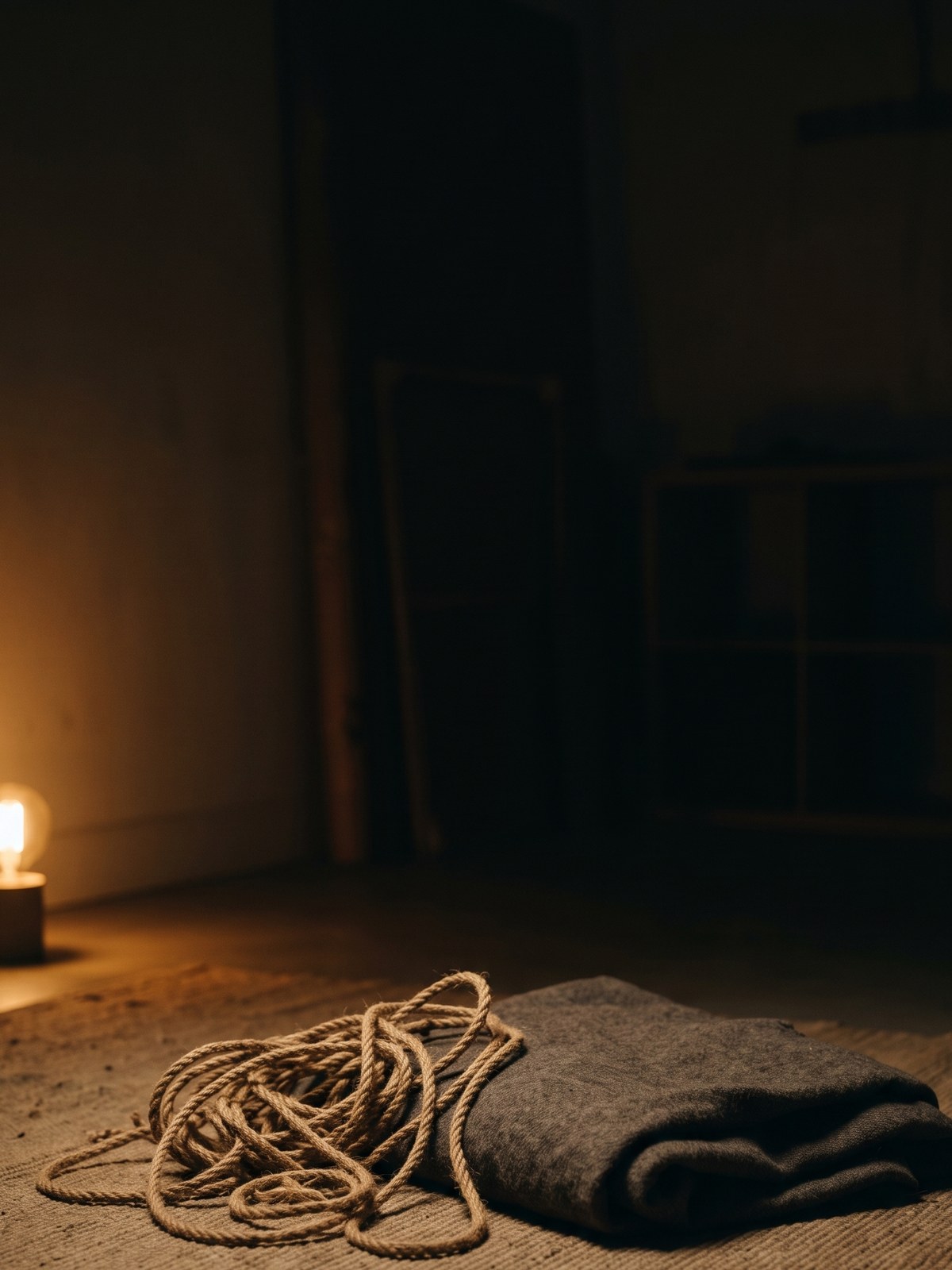
The rope came off in the usual order, ankles first, then the chest harness. He lay on the mat and his thighs began to shake. A fine, fast tremor ran from hip to knee, stopped, and started again, and it had nothing to do with cold. He looked up with an expression somewhere between apology and astonishment, and said the sentence guests almost always say in that moment. I do not know where this is coming from.
Tears arrive the same way. So does laughter, which surprises people more, since it seems to belong to a different kind of evening. A guest can be perfectly composed through an hour of demanding sensation and then dissolve into helpless giggling while I untie a wrist. Another weeps quietly during aftercare, having felt nothing resembling sadness all night. Most apologise. Some are embarrassed enough to leave quickly, and I understand why, since we are taught that composure is the price of being taken seriously. These moments are among the most reliable things that happen in a room like mine, and among the least discussed.
The body prepares for intensity long before the mind agrees to it, and it does not always get to finish what it prepared. Muscle gathers, attention narrows to a single point, the whole system leans forward. When that mobilisation is never spent, the charge does not simply evaporate. It stays, quietly, in the jaw and the shoulders and the hips, waiting for a moment safe enough to complete itself. Shaking is often that completion. So is weeping. The body is not manufacturing an emotion so much as finishing a sentence it began years ago and never got to end.
The same process has a stiller version, and that one is easier to miss. Some guests go very quiet under pressure. The face smooths over, the hands stop moving, answers come back polite and slightly delayed. This is roughly what people mean by freeze, and it can look like the twin of deep surrender. Telling those two apart is most of the skill. Restraint complicates it further, because being held still removes the ordinary options, and for some people that is exactly the relief. They stop managing. A nervous system no longer required to be presentable will do what it has wanted to do for a long time. Release often arrives as the rope comes off, not as it goes on.
What makes the difference is the container, not the intensity of what happens inside it. Reliable edges matter enormously. A guest who knows the arc, who has been told what is coming and trusts that it will stop when it is meant to, can set down a vigilance he may have carried since childhood. Predictability is the permission. This is the quiet argument for calibration over escalation, and it is why the most affecting sessions I have held were rarely the most extreme ones.
Catharsis and retraumatisation can look almost identical from outside. Both involve tears, both involve shaking, both leave a person undone. The difference is not volume. It is whether the person is still in the room with you. In release, contact holds. Eyes find mine, a hand closes on my forearm, the breath deepens on its own, and there is a return. In the other, contact goes. The guest is somewhere else, in a scene that is not this one, and my voice does not reach him. Then the work is to stop: warm the room, raise the light, use his name, ask him to tell me three things he can see. Bringing someone back is not a failed evening. Catching that moment early is the job.
Aftercare belongs to this as the second half of the technique rather than as a courtesy tacked on at the end. A body that has discharged something needs warmth, weight, sugar and unhurried time before it is fit to be sent out into the U-Bahn. I have set out elsewhere why aftercare is not an afterthought, so here I will say only that the twenty minutes after a release shape how it is remembered more than anything that preceded them.
I want to be exact about what this is not. I am not a therapist. I do not treat trauma, and no session I run substitutes for care from someone qualified to give it. The overlap is real and I will not pretend otherwise, since we both work with attention, with the body, with pacing and consent and aftermath. Some of what happens in my studio resembles what happens in a good consulting room. Resemblance is not equivalence. A therapist holds training I do not hold, a duty of follow-up that no single evening can offer, and an accountability structure built for exactly that. How bodies behave under threat has been mapped carefully by people with that training, and DeGPT, the German-speaking society for psychotraumatology, keeps a public directory of practitioners trained to do that work. When something surfaces on my mat that belongs in their room rather than mine, I say so, and I would rather say it clumsily than not at all.
So I do not chase release. Producing tears is not an achievement, and a session engineered to break someone has confused spectacle with skill. My task is narrower and harder: to build a container precise enough that the body can decide for itself whether it wants to put something down. Sometimes it does. Often it does not, and the evening is no poorer for it. The body remembers on its own schedule. My part is to be present, unhurried, and still there when it does.
Next: When What You Asked For Is Not What You Needed - Reading the Need Beneath the Request →
← Previous: The Dominant's Half of the Ledger - What Holding Someone's Surrender Actually Costs