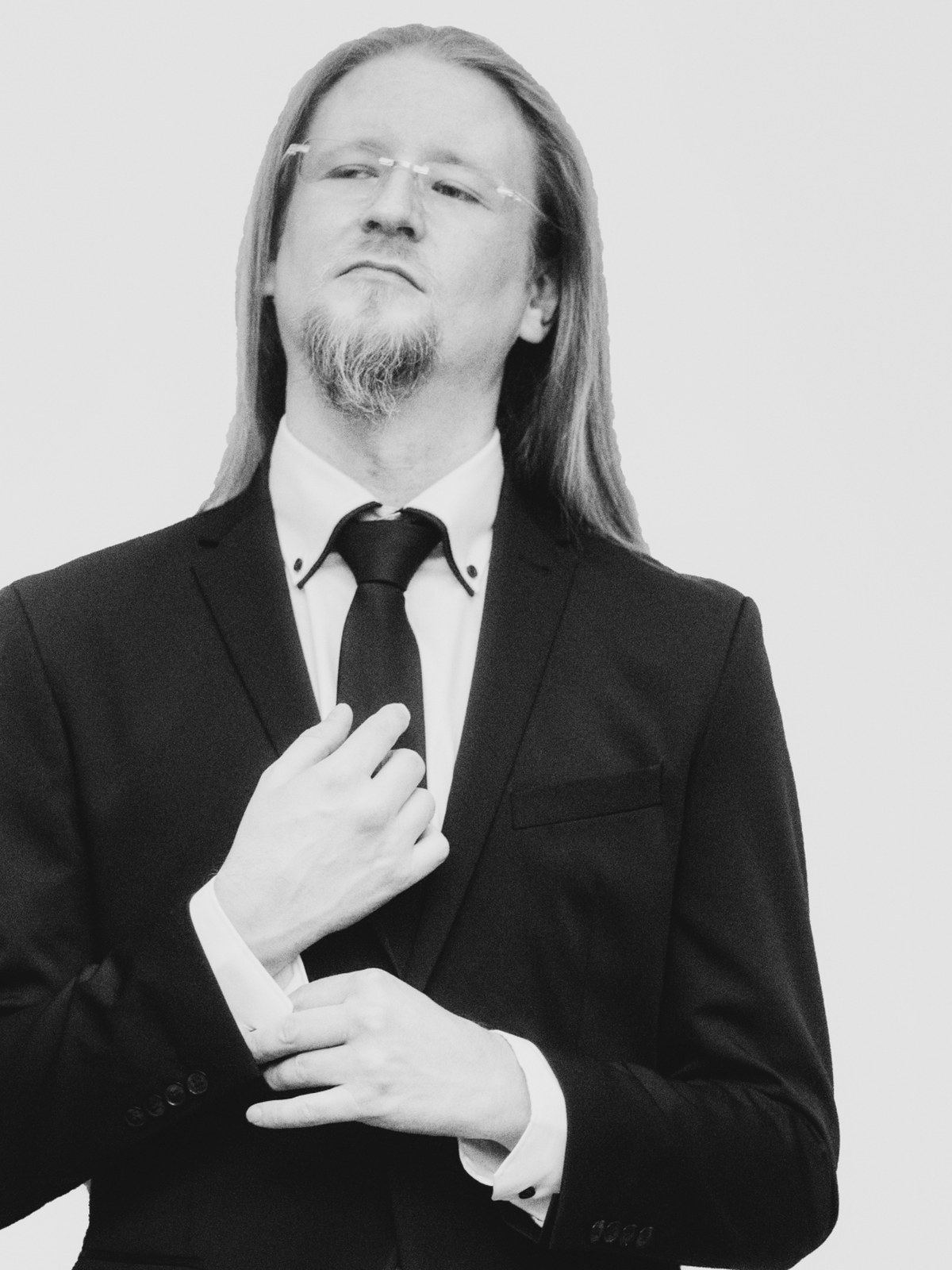
The Dominant's Half of the Ledger - What Holding Someone's Surrender Actually Costs
From the doorway it would look like I am doing almost nothing. Standing still, one hand resting on a shoulder, not speaking. What is actually happening: I am watching where the rope sits against the shoulder joint, counting how long the position has held, weighing the sound he made a moment ago against the sound he made an hour ago, and keeping a clock on all three. This is the third hour. I have not looked away from him once, and I will not for another two.
The exchange is almost always described in one direction. The submissive gives; the Dominant receives. Guests arrive braced to spend something of themselves - control, composure, a little dignity - and assume the person opposite is simply collecting it. The imagery encourages this. The Dominant is pictured seated, unhurried, served. Effortlessness is part of the aesthetic, and I understand why: nobody surrenders to someone who looks like they are struggling. But the aesthetic has quietly become the analysis. We have a rich vocabulary for what surrender costs, and almost none for what holding it costs.
Start with attention, the largest line in the ledger. Sustained, undivided attention burns fuel. The mind was not built to hold one object steadily for four hours, and that is precisely the requirement. Skin colour at the wrists. The temperature of the hands. Whether a laugh has gone brittle. The distance between difficult-and-good and difficult-and-wrong, sometimes a matter of seconds. Running underneath all of it is memory: what worked in March, which word landed badly, which touch was welcome on one side and never the other.
Then restraint, harder to see because it consists of things that do not happen. Most of the craft is subtraction. Not escalating when escalation is available, wanted, and would be applauded. Holding a pause while someone begs you to move faster, because you can hear that the begging is momentum rather than desire. Desire is in the room, mine included, and it stays at a courteous distance from every decision. Power deliberately not used is still power being carried. The guest feels the calm; what they cannot see is the constant, quiet declining.
The third cost is regulation. People tell me things in that room they have not said aloud to anyone, and it usually arrives sideways, once the body has already let go. A sentence about a parent. A marriage. A shame carried since they were fifteen. Whatever I feel about it, my face does not change - not because feeling is unprofessional, but because a flicker of shock would tell them the container is thinner than they believed. I receive it, hold it steady, and set it down later, alone. That deferral is a skill, and it is not free.
Being trusted with someone at their most exposed is called a privilege, and it is. Privilege is only half the word. It is also a weight, and the honest sentence is that I am glad to carry it and it is heavy. My trade is unusual; the arithmetic is not. Nurses, hospice staff, therapists, interpreters sitting through asylum hearings - anyone whose job is to absorb what other people cannot hold - reports some version of it. The World Health Organization files burn-out as an occupational phenomenon rather than a medical condition, and describes it as chronic workplace stress that has not been successfully managed. That distinction matters: what is being described is a working life, not a diagnosis a person carries. The operative word is managed. A load is survivable. An unattended load is what eventually removes people from work they love.
Aftercare is normally discussed as something the guest receives, and I have written about it in exactly those terms. That account was only half the picture. Aftercare exists because a nervous system that has been somewhere extreme needs company on the way back, and mine was in the same room the whole time, doing a different job under identical conditions. So the answer has to be structural rather than heroic. I do not put two demanding bookings back to back, whatever the diary would prefer. Extended sessions get clear air on either side, because ten hours of held attention does not end when the guest goes home. I keep people close who can hear about this work without alarm. I sleep properly. Call it maintenance rather than self-care, in the sense that a climber inspects the rope before trusting it again. A Dominant who denies the cost does not become stronger. He becomes careless.
I want to be careful here, because this argument curdles easily into complaint, and complaint would be both unattractive and untrue. Nobody conscripted me. The attention is the pleasure as much as the price, and the restraint is where the craft actually lives. A surgeon does not resent concentration. My objection, if I have one, is narrower: a cost nobody names is a cost nobody can plan for, and when the planning fails it is the guest who feels it first.
The last twenty minutes of an evening are always the same. The guest has gone, warm and slightly dazed and well looked after. I coil the rope by hand, one loop at a time, and open the window. The room cools. Somewhere in that quiet the man who was holding everything puts it down on purpose and becomes ordinary again. Nobody books those twenty minutes. They appear on no price list, they belong to no one else, and I have never once skipped them.
Next: The Body Remembers - Somatic Release and What It Is Not →
← Previous: How to Choose a Professional Dominus - Reading the Signals Before Your First Booking